Protecting the 24-Volt Direct Current (DC) System – The Backbone of Industry 4.0
Industrial automation is rapidly evolving from rigid, standalone systems into interconnected, intelligent networks that define Industry 4.0. Modern industries are not just automated - they’re hyperconnected with thousands of sensors, controllers and many sophisticated devices. The fusion of digital technologies — particularly the Industrial Internet of Things (IIoT), with its sensor-generated real-time data streams — powers this transformation by facilitating predictive maintenance and dramatically cutting unexpected equipment failures. In the world of modern manufacturing, where precision sensors, complex logic controllers and interconnected devices drive production, there is one constant across multiple architectures – the power source which is a 24-volt direct current (DC) system.
24V DC has emerged as the global standard for powering industrial control systems because it strikes the right balance between safety, reliability and compatibility. It is low enough to minimize the risk of electric shock to operators, yet high enough to provide sufficient power for sensors, actuators, controllers, and communication modules used in automated systems. This voltage level is also less susceptible to noise compared to lower-voltage logic signals, making it ideal for long cable runs common in industrial environments. Furthermore, 24V DC power supplies and components are standardized globally, ensuring interoperability across equipment from different vendors. As a result, 24V DC serves as the backbone of power management of modern manufacturing automation, supporting both operational safety and system efficiency.
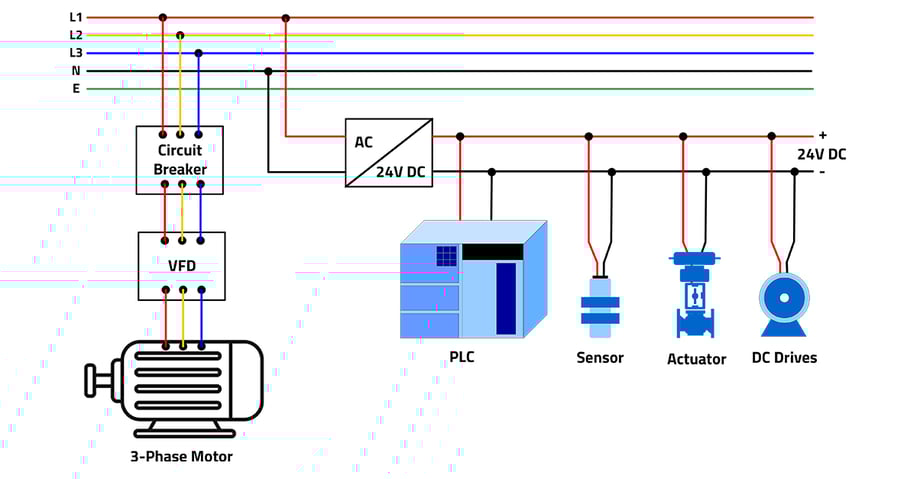
Figure 1. Powering the industrial devices
When Milliseconds Mean Millions: The Cost of Electrical Disturbances
Modern industrial automation relies on sophisticated 24V DC-powered sensors and controllers to coordinate production processes. However, these sensitive electronics must coexist with powerful 3-phase AC equipment—including motors, pumps, compressors, and heavy machines, all sharing the same electrical infrastructure shown in Figure 1. The frequent switching of these high-power loads generates continuous electrical disturbances, creating surges and electrical overstress (EOS) conditions throughout the power system.
Today's hyperconnected factories, equipped with thousands of sensors, actuators, controllers, and smart devices, face a critical vulnerability. A single electrical transient can damage sensors or crash controllers, triggering expensive production stops. Manufacturing downtime costs potentially reach hundreds of thousands of dollars per hour. So implementing robust EOS protection has become essential for ensuring operational reliability and maintaining production efficiency. This article explores how Semtech's TDS2621LP from its SurgeSwitch® family provides an effective solution for protecting 24V DC power lines against these persistent electrical threats.
Electrical Overstress and Why we Can’t Ignore It
Electrical Overstress or EOS refers to a condition where a device experiences electrical parameters (voltage, current or power) beyond its absolute maximum ratings. This deviation from the specified safe operating area (SOA) initiates permanent physical changes within the device's structure. The consequence of EOS is typically displayed through two primary failure modes that pose significant challenges to the device's lifecycle and reliability. The first and most immediate mode is a catastrophic failure, characterized by abrupt and complete device malfunction. This can involve phenomena such as thermal runaway leading to junction burnout or any mechanical damage to internal interconnects like bond wires due to excessive current flow. Such failures are typically easy to diagnose during production testing due to their noticeable nature. The second which is arguably more deceptive is the latent damage. In this scenario, the affected device often keeps working immediately after an EOS event. Instead of a dramatic shutdown, the device may only experience a small shift in parameters — like slightly increased leakage current or weakened semiconductor junctions. But the device continues operating normally until the stress accumulates and finally it pushes it to the failure point. When the failure eventually happens, it often appears like a random breakdown, or a manufacturing defect. Only testing the circuits under high-end microscopes or sending them to failure analysis labs can determine the actual cause of failure. Otherwise, it is difficult for the operators to link the problem back to an EOS event that occurred weeks or months earlier.
Three Faces of Electrical Overstress
Depending on the source of stress, EOS encompasses various transient and sustained electrical events that exceed a component's specified operating limits.
- Electrostatic Discharge (ESD): When an object with a higher charge comes in contact with another object with a lower charge, electrons flow from one object to another. This sudden redistribution of charges may lead to a rapid flow of high current for a very short period (~60 ns) and a catastrophic ESD event occurs.
- Electrical Fast Transient (EFT): This is characterized by a series of fast, high-frequency pulses that can be generated by switching devices, such as relays, contactors or circuit breakers, as they turn on or off in the industrial environment.
- Surge: A surge is a short-lived, high-energy voltage and current spike. They can range from a few microseconds to milliseconds. Unlike ESD and EFT events, surges persist longer and contain higher energy levels. It is more dangerous than these other forms of EOS events. Surges can occur due to direct lightning strikes or indirect lightning effects through electromagnetic coupling. Surges can happen due to power supply switching, load changes in power distribution systems or when a transformer or a large motor starts up in a power line.
ESD and EFT are fast rise-time events; they have a rise-time on the order of one nanosecond (often less than one nanosecond). Surge events are slow rise-time lightning induced pulses as shown in Figure 2. These waveshapes are generally microsecond events holding much higher energy than ESD or EFT, with voltages in kilovolts and currents in kiloamps. Surges combine high voltage, high current and long duration, so the stress on junctions are considerably larger. Surges are capable of destroying sensors, actuators, relays, power supplies, motors, and copper traces. As modern electronic systems become smaller, faster and more connected, the susceptibility of circuits to surge-induced overstress rises significantly, emphasizing the critical need for advanced, fast-responding surge protection solutions such as Semtech’s SurgeSwitch to ensure system-level robustness and long-term dependability.
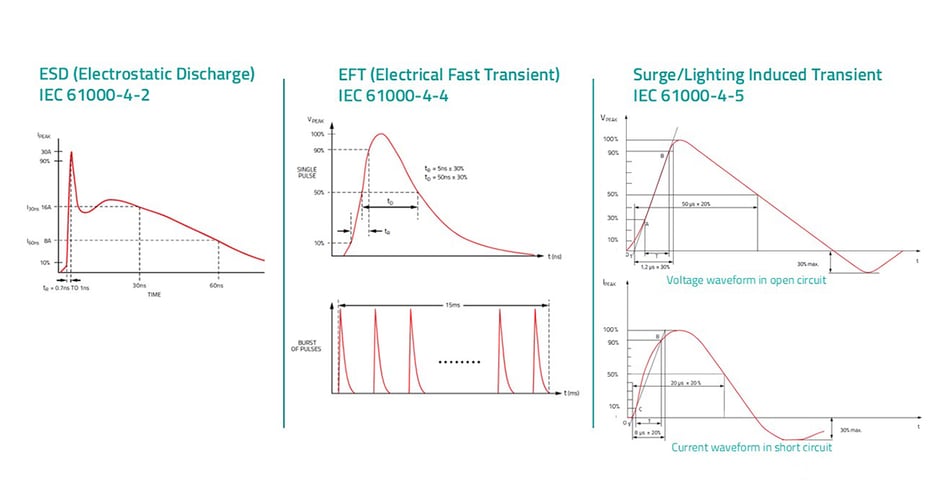
Figure 2. Types of Electrical Overstress (EOS) events
A Smarter Approach to Surge Protection
As mentioned earlier, industrial automation systems have been consistently using 24V DC power distribution. However, these systems face constant threats from voltage transients, ESD events and power surges. Traditional transient voltage suppressor (TVS) diodes have served this role for many years, but they often fall short when it comes to low clamping voltages at high surge currents and also at high temperature. Semtech’s TDS2621LP is an innovative SurgeSwitch that addresses this gap with a surge-rated field-effect transistor (FET)–based architecture (Figure 3) that provides stable clamping and superior transient handling even in the harsh industrial environment.
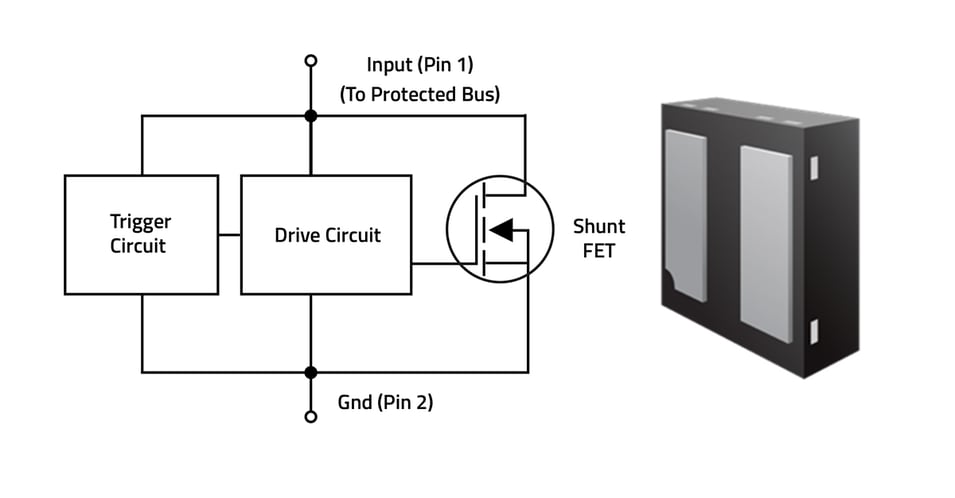
Figure 3. Functional diagram of TDS2621LP (left), Package diagram (right)
The maximum working voltage of TDS2621LP is 26.4V and the minimum breakdown voltage is 31V. Because of this working voltage and breakdown voltage, TDS2621LP is ideally suited for the 24V DC industrial systems, providing adequate margin for normal voltage variations while ensuring reliable protection during transient events.
Semtech’s TDS2621LP at a Glance
- Max working voltage (VRWM): 26.4V
- Breakdown voltage (VBR): 31V (Minimum)
- Peak pulse current (IPP): 24A (tp=8/20µs)
- Clamping voltage (VCLAMP): 35V at 24A (Maximum)
- Dynamic resistance (RDYN): 32mΩ
Robust Protection Capabilities
- Surge compliance: ±1kV per IEC 61000-4-5
- ESD immunity: ±20kV contact/ ±25kV air per IEC 61000-4-2
- 840W peak pulse power
- Operating temperatures from -400C to 1250C
Beyond Conventional TVS: The SurgeSwitch Advantage
Constant Clamping Voltage when it Matters Most
Conventional TVS diodes are PN-junction devices with the total clamping voltage determined by the reverse breakdown voltage, peak pulse current, and dynamic resistance. The clamping voltage rises with increasing peak pulse current (Ipp), accompanied by a rise in dynamic resistance. Higher dynamic resistance leads to significantly elevated clamping voltage compared to the reverse breakdown voltage. SurgeSwitch offers nearly constant clamping voltage across the rated peak pulse current range shown in Figure 4. The clamping voltage of a traditional TVS diode increases with the peak pulse current, whereas the SurgeSwitch's clamping voltage remains almost constant till the maximum peak pulse current. The on-resistance of the MOSFET in a SurgeSwitch is controlled inversely with the peak pulse current. So, the product of the on-resistance and the peak pulse current, which is basically the clamping voltage, remains nearly constant throughout the range.
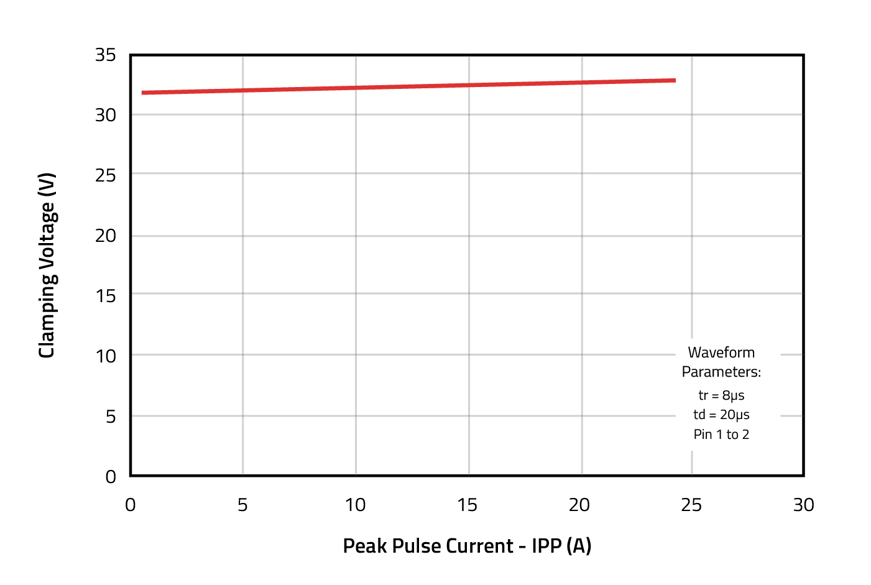
Figure 4. Peak pulse current vs clamping voltage of TDS2621LP
Tighter Margins, Better Protection
Clamping voltage is the voltage that the system will be exposed to during a surge. So, the lower the clamping voltage, the less chance that the protected system will see failures due to transient EOS events. A lower clamping voltage indicates better protection, as it creates a larger safety margin for other components in the system. This advantage becomes critical when the clamping voltage approaches the absolute maximum ratings of input circuitry—exceeding these limits causes system failures regardless of the TVS diode's current shunting capability. A higher clamping voltage requires choosing components that can handle those higher levels. So basically, higher clamping voltage pushes designers to either specify components with elevated voltage ratings or implement parallel protection configurations to manage worst-case scenarios. Both approaches increase costs and consume valuable board space. Therefore, optimal protection design prioritizes TVS diodes with sufficiently low clamping voltages to maintain robust protection while avoiding the penalties associated with over-specified components. Conventional TVS diodes typically exhibit high clamping voltages—often 1.5 to 2 times their working voltage—which limits their effectiveness in protecting sensitive modern electronics in the industrial systems.
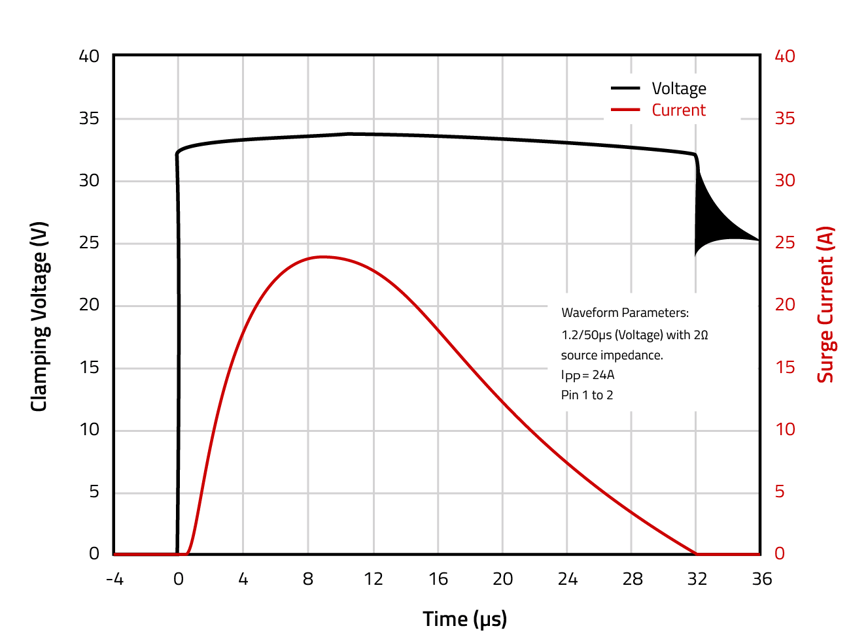
Figure 5. Clamping Voltage waveform at Ipp=24A
Figure 5 shows the clamping voltage waveform of TDS2621LP at Ipp=24A (tp=1.2/50µs). The clamping voltage of the SurgeSwitch is about 30% less than the clamping voltage of conventional TVS diodes.
Performance that Doesn't Fade Under Heat
Temperature dependence of a conventional PN junction TVS diode increases the challenges described in the previous section by increasing both breakdown voltage and dynamic resistance, degrading clamping performance precisely when thermal stress is highest. The power dissipation capability of a conventional TVS diode follows a steep derating curve with temperature, typically dropping 50% to 80% from 25°C to 125°C as shown in Figure 6 below. Whereas for a SurgeSwitch, the drop is around 20% only.
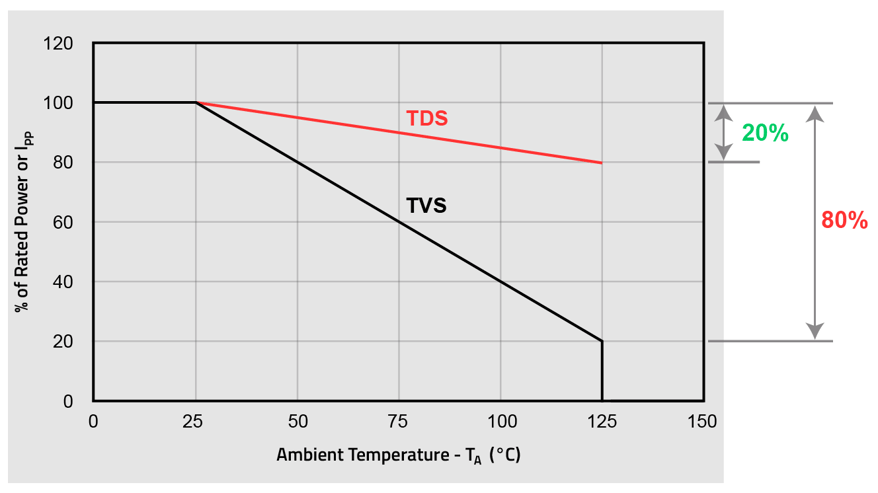
Figure 6. Pulse derating curve comparisons between a conventional TVS diode and SurgeSwitch (TDS)
Figure 6 shows the typical pulse derating curve shown in the datasheets of the conventional TVS diodes with similar ratings of TDS2621LP. As an example, let us consider that the conventional TVS diode’s peak pulse current capability is 24A at room temperature (250C) similar to TDS2621LP. At 750C the peak pulse current capability decreases to 14.4A, and at 1250C it decreases to 4.8A. This creates a critical design concern such as protection circuits validated at room temperature against IEC 61000-4-5 standard, may fail at elevated operating temperatures. According to Figure 6, the peak pulse current for TDS2621LP at 1250C is around 19.2A.
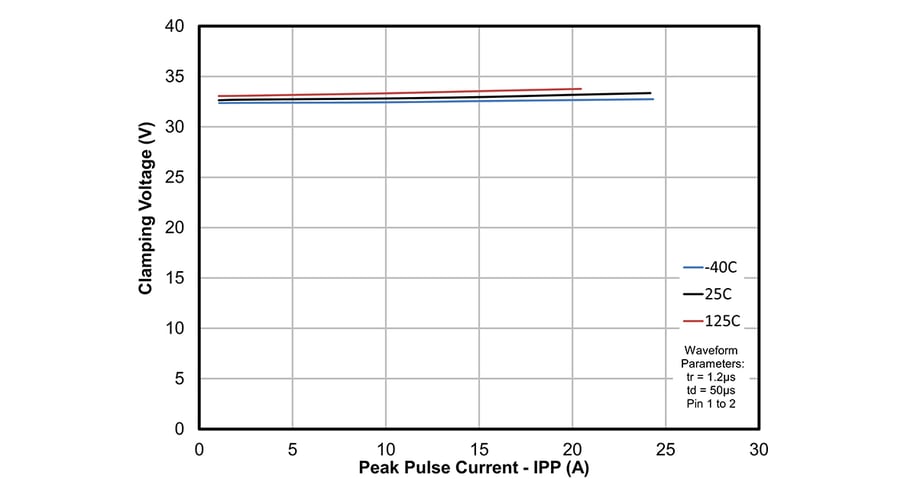
Figure 7. Ipp vs clamping voltage of TDS2621LP at different temperatures
Figure 7 shows the peak pulse current vs clamping voltage of TDS2621LP at different temperatures. We can clearly see that the clamping voltage remains nearly constant at different temperatures for the entire surge range. At the same time, we can see that the Ipp at 1250C is around 20A.
Protecting what Powers Production
As Industry 4.0 continues to transform manufacturing through hyperconnectivity and intelligent automation, the vulnerability of sensitive 24V DC control systems to electrical overstress has never been more critical to address. With production downtime costs reaching hundreds of thousands of dollars per hour, the stakes of inadequate surge protection are simply too high to ignore. Semtech's TDS2621LP SurgeSwitch represents a fundamental advancement beyond conventional TVS diode technology. For design engineers, the TDS2621LP offers a compelling value proposition: superior transient suppression that safeguards sensors, actuators, and controllers, reduced system-level costs through lower component stress margins, and the confidence that protection performance won't degrade when thermal conditions are most challenging.
Visit www.semtech.com/products/circuit-protection/surgeswitch/tds2621lp to know more about SurgeSwitch TDS2621LP.
Contact your Semtech representative for your next design support.

Semtech®, the Semtech logo, and SurgeSwitch® are registered trademarks or service marks of Semtech Corporation or its affiliates. Other product or service names mentioned herein may be the trademarks of their respective owners.